Задача
Собрать мессенджер с собственным продуктовым опытом и управляемой серверной инфраструктурой.

Доступен
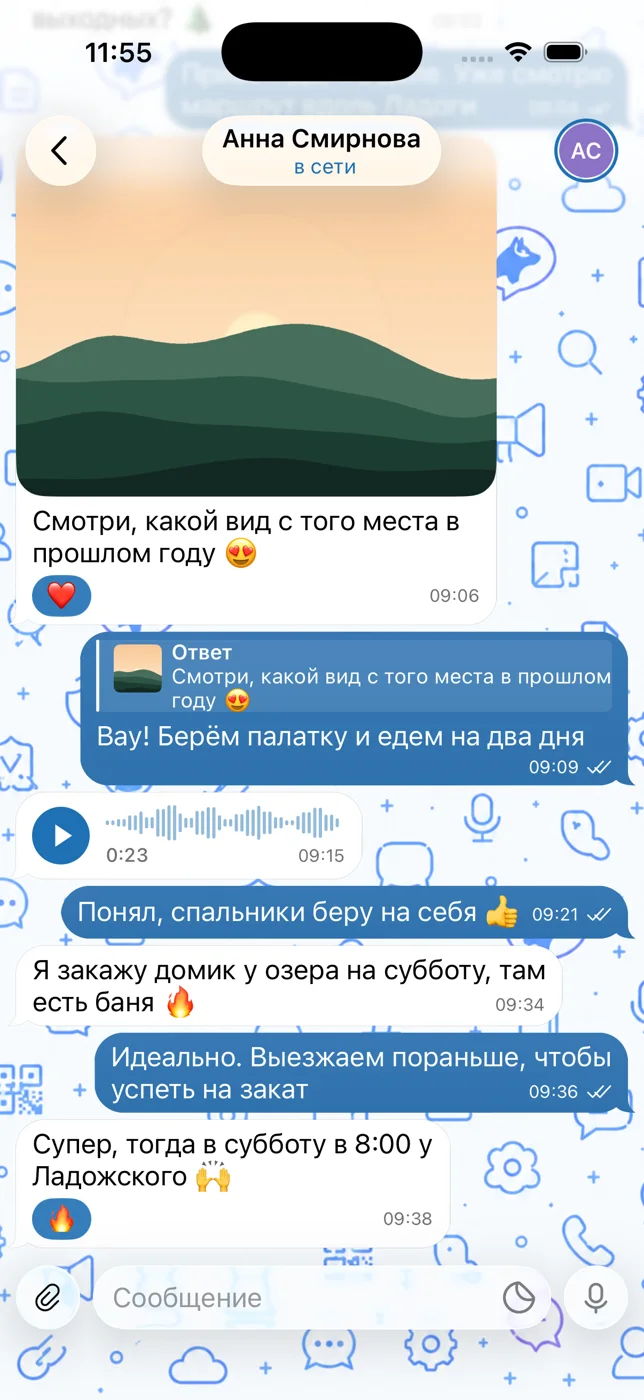
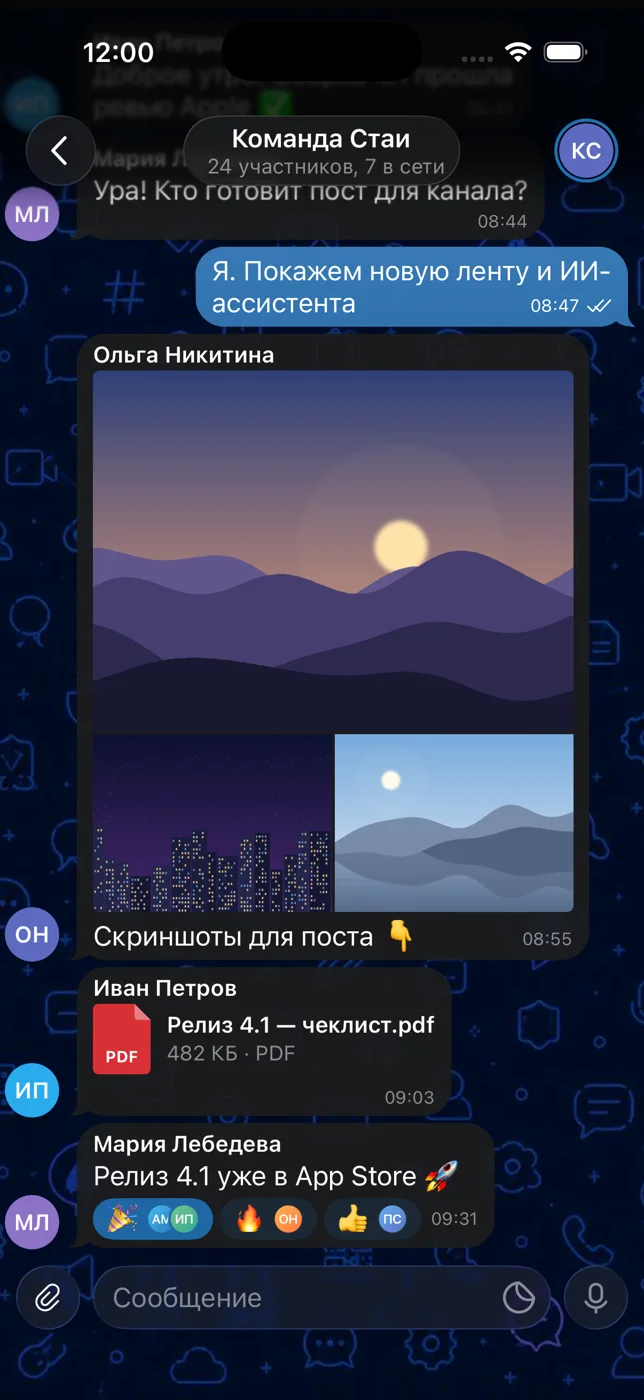
Мобильный продукт, серверная система, сообщения, медиа и звонки. От проектирования до публикации и обратной связи.
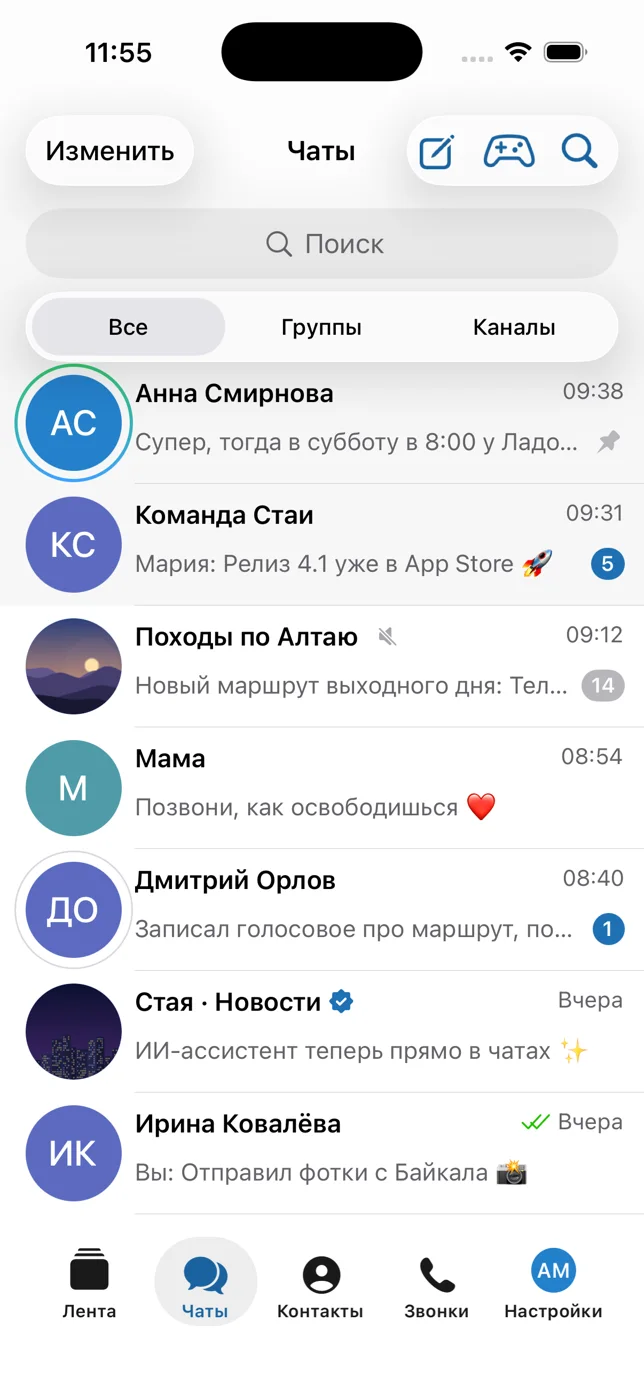
Свежий тестовый экран клиента с демонстрационными данными
Собрать мессенджер с собственным продуктовым опытом и управляемой серверной инфраструктурой.
Продуктовые решения, архитектура, интеграция клиентов и сервисов, организация тестирования, выпуска и продвижения.
Клиенты связаны с API и realtime-контуром. PostgreSQL хранит данные, Redis поддерживает быстрые операции, MinIO обслуживает медиа. Контур звонков использует Go и Pion. Нативный iOS-клиент опирается на открытый код Telegram-iOS; новые Android-модули на Kotlin развиваются отдельно от опубликованного клиента.
Приложение опубликовано в App Store и Google Play. Релиз в App Store: 22 февраля 2026 года. Публичные ролики документируют развитие продукта и реакцию аудитории.
Работающий продукт. Продолжаю развитие клиентов, звонков и инфраструктуры.
Действие в интерфейсе должно пройти авторизацию, сохранение, доставку и подтверждение. Рядом работают медиа, push и независимый контур звонков.
Разобрать архитектуруiOS · Android
FastAPI · WebSocket
PostgreSQL · Redis · MinIO
Push · Go / Pion · WebRTC
Видео недоступно. Сохранённый кадр остаётся доступен.